
A mother who was 16 years old when she gave birth and who has a history of homelessness regained custody of her child after the Court of Appeal found the Riverside County Department of Public Social Services failed to investigate the child’s Native American claims as required by a federal law.
The department’s failure to interview the child’s grandparents violated the Indian Child Welfare Act, and invalidated Riverside Superior Court’s order to terminate the mother’s custody rights and give the child up for adoption, the Court of Appeal ruled June 7.
The department agreed that the ICWA was not properly followed.
ICWA, enacted more than 40 years ago, gives child custody jurisdiction to Native American tribes if the children involved are members of the tribe. It is intended to keep Native American children in Native American homes, due to “abusive child welfare practices that resulted in the separation of large numbers of Indian children from their families and tribes through adoption or foster care placement,” according to the California Supreme Court.
A child’s Native American ancestry must be investigated during custody proceedings under the law.
Court of Appeal tired of error
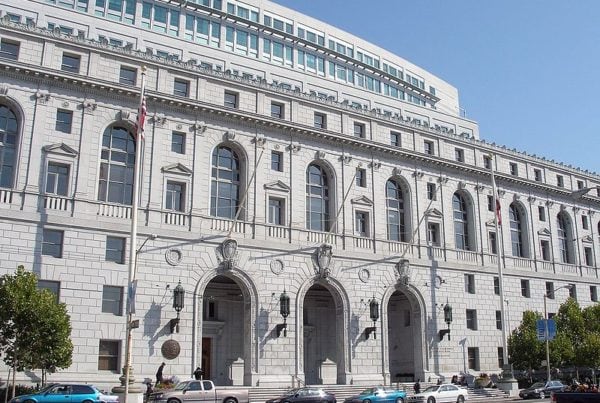
The Fourth District Court of Appeal, Division Two, had admonished the neighboring San Bernardino Superior Court and the San Bernardino Department of Child Support Services for the failure to follow the ICWA in a March 23 published opinion.
“This is concerning, especially considering our court’s admonishment from nearly a decade ago that we were ‘well past the stage of ‘growing weary of appeals in which the only error is the (agency’s) failure to comply with ICWA,’’” the panel said, quoting a 2015 case out of Riverside, which quoted a 2008 case from Los Angeles.
The panel published their opinion to send a message to juvenile courts and child protective agencies.
“We publish our opinion not because the errors that occurred are novel but because they are too common. Child protective agencies and juvenile courts have important obligations under ICWA. Failing to satisfy them serves only to add unnecessary uncertainty and delay into proceedings that are already difficult for the children, family members, and caretakers involved. Delayed investigation may also disadvantage tribes in cases where it turns out ICWA does apply, as their opportunity to assume jurisdiction or intervene will come at a late stage in the proceeding,” the appellate panel said.
Mother’s background
The mother in this case was dependent on the state, but had been homeless and missing from her group home for nine months when she gave birth in October, 2020, according to the ruling.
Her child was born positive for marijuana, and she had a history of hospitalizations relating to mental illness, according to the ruling.
Neither the mother nor the father, who was abusive and 25 when the mother gave birth, appeared at an Oct. 9, 2020, detention hearing held by the Los Angeles Superior Court, according to the ruling.
The case was transferred to Riverside County Jan. 29, 2021.
The parents were absent during Riverside’s juvenile court hearings, and the mother’s location was unknown to the court for six months.
She sent emails to the Department of Public Social Services, stating she was on the run and was not yet ready to be a mother. She later stated she did want to be a mother, and appealed under the violation of the ICWA, according to the ruling.
The appellate decision ordered Riverside Superior Court to investigate the child’s Native American ancestry.
Case information
Riverside Superior Judge Donal Donnelly presided.
Michelle Jarvis, under appointment, represented the mother.
County Counsel Gregory Priamos and Deputy County Counsel Julie Jarvi represented the Riverside County Department of Public Social Services.
Associate Justice Carol Codrington wrote the opinion, which Presiding Justice Manuel Ramirez and Associate Justice Douglas Miller joined.
Superior Court number RIJ2100055.
Appellate Court number E078640.
Read the appellate ruling here.