

A convicted Cathedral City robber and gang member might see a new trial after a 2021 law changed the standards for gang convictions, an appellate panel ruled Feb. 22.

Elijah Hall was convicted in Riverside Superior Court on six counts of robbery, each with firearm and gang enhancements, and one count of active participation in a criminal street gang.

Assembly Bill 333, written by Sen. Sydney Kamlager (D-Los Angeles), raised the burden for criminal street gang convictions. The change requires the prosecution to prove that two or more gang members committed each offense to prove gang allegations.

Previously, an individual acting on their own for the purpose of a gang could receive a criminal street gang conviction.

The change also narrowed the definition of “pattern of criminal gang activity,” which must also be proven for gang enhancements and convictions.

A pattern of criminal gang activity is now defined as specific offenses committed by two or more gang members done in order to benefit the gang in more than a reputational sense.

AB 333 also limited the list of offenses that would count toward criminal gang activity.

The robberies

According to the appellate ruling, Elijah Hall, 15, robbed and beat a man with a group of others Feb. 7, 2015, after one of Hall’s associates asked the man if he knew anyone from a certain gang.

Hall committed a home invasion with the group the same night. One member of the group said he was from the Cathedral City gang Barrio Dream Homes, and was there to collect on a drug debt. The group stole $40 and a computer tablet that their victim had been recording a rap song on, and Hall struck the victim in the face with a rifle. They also stole a cell phone and a gaming system from their victim’s girlfriend’s son and his friends, and yelled “Dream Homes” as they fled.

The tablet they stole continued to record their conversations as they fled.

They discussed their crimes, and mentioned Hall repeatedly by name.

A police pursuit resulted in a crash, and Hall was found in a bush with the stolen cell phone.

Hall was convicted in June, 2018.

The trial judge recalled his sentencing, and transferred his case to juvenile court due to Proposition 57, which raised the minimum age a minor can be tried as an adult from 14 to 16. Hall’s convictions were then treated as juvenile adjudications.

The appeal

Hall’s appeal claimed AB 333 required reversal of his gang offense and gang enhancements. The appellate panel agreed, and remanded the case to juvenile court for a new trial.

 Because the jury might have thought the crimes might have been done in order to boost the gang’s reputation, the conviction did not meet the new statute, which requires gang enhancements require more than a reputational benefit to the gang.

The trial record also did not show that the pattern of criminal activity by gang members reflected crimes that were individually committed, or committed with at least one gang member. A pattern of criminal activity was not sufficiently proved, the panel found.

Hall also claimed the trial judge erred in its jury instructions regarding witness testimony.

The panel found that claim forfeited because he did not object at the time of the trial.

The panel also found witness testimonies were not the strongest evidence connecting Hall to the robberies, because he was named in the tablet’s recording and was caught with a stolen item.

A change in jury instructions regarding testimony would not reasonably change Hall’s result, the panel found.

Parties

Riverside Superior Judge Russell Moore oversaw the case.

Daniel Kessler, under appointment, represented Hall.

Attorneys General Rob Bonta and Xavier Becerra, Chief Assistant Attorney General Lance E. Winters, Assistant Attorney General Julie L. Garland, and Deputy Attorneys General Michael Pulos and Kathryn Kirschbaum represented the People.

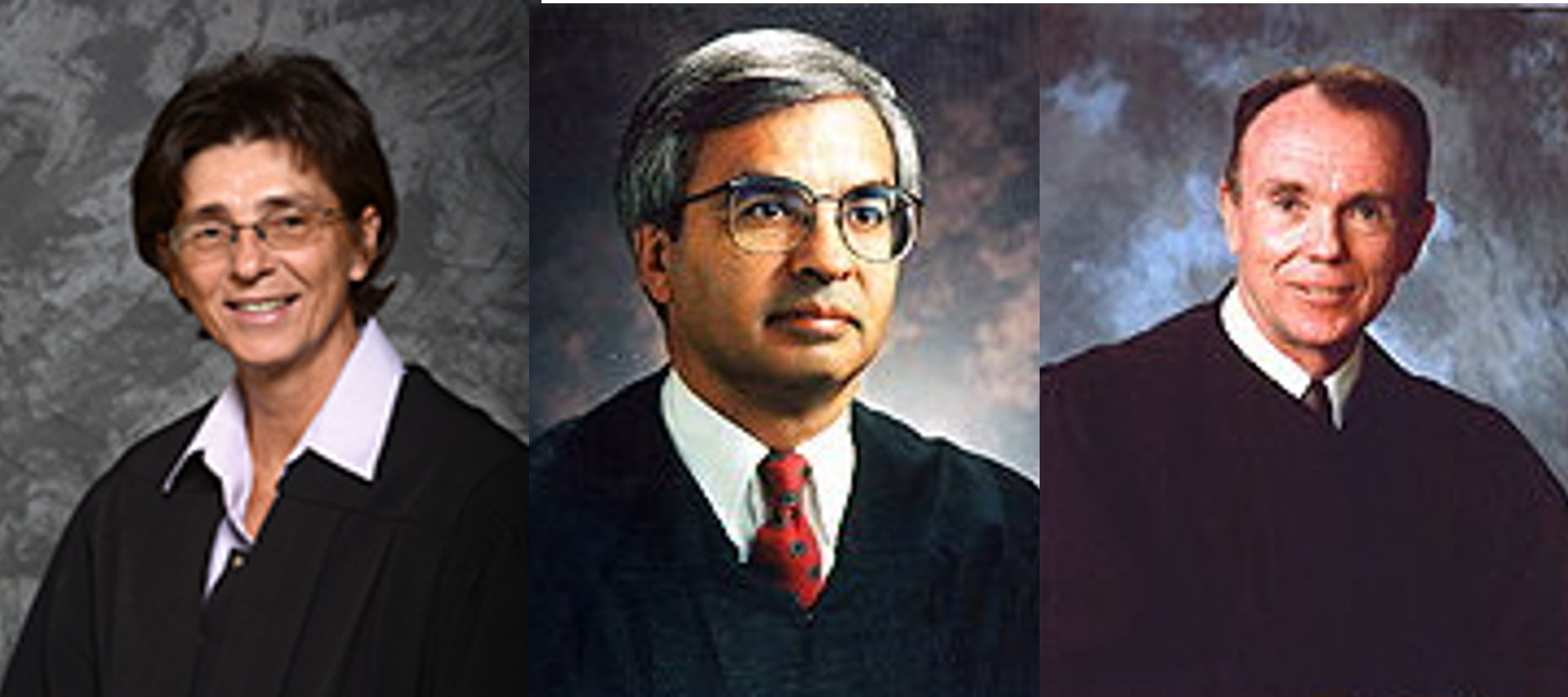
Fourth District Court of Appeal Associate Justice Marsha Slough wrote the opinion, which Associate Justice Art McKinster and Presiding Justice Manuel Ramirez joined.

Appellate number E072463.

Superior Court Numbers INF1500253 and INF1500502.

Read the ruling here.

Topics to follow


assignment_turned_in Registrations


Subscribe now for free

Follow Our Courts will never charge for access to our content, and we will not sell your information.

Password must be at least 7 characters long.
Please login to view this page.