An armored car company filed an amended federal complaint, claiming that San Bernardino County Sheriffs, working with the FBI and the Drug Enforcement Agency, is illegally targeting their vehicles and seizing their clients’ money.
Empyreal Enterprises claims sheriff’s deputies stopped their car three times, and seized more than $1 million that the company had to indemnify to their legal cannabis-based clients.
San Bernardino County Sheriff Shannon Dicus and the federal defendants have until April 15 to file their responses to the complaint.
In court documents, Dicus and his deputy asserted legitimate reasons for the stops.
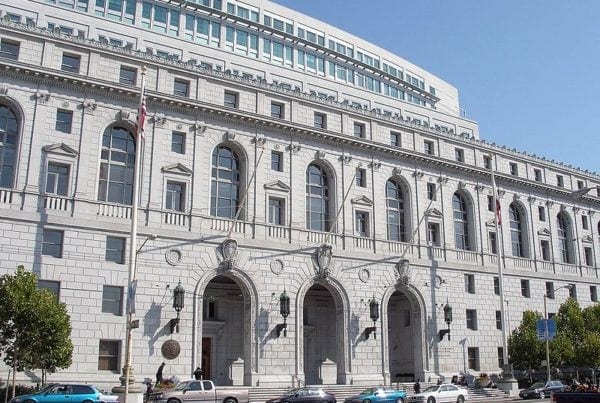
California Central District Judge John Holcomb expressed concerns over Empyreal’s litigation tactics and denied a restraining order against the sheriff’s office Jan. 31.
Case background
Empyreal, a Pennsylvania company that provides financial infrastructure support for the medical-cannabis industry, but says transporting cannabis is not something they do, filed their first complaint Jan. 14.
In their complaint they allege that two stops made by Kansan sheriffs were orchestrated by federal law enforcement in May, 2021, followed by Nov. 16, Dec. 9 and Jan. 9 stops by San Bernardino sheriffs’ deputies.
Deputies seized $700,000 in the Nov. 16 stop, which the deputies said was for driving too close to a semi-truck, according to the complaint.
“Empyreal may very well have an excellent case on the merits—the Court respects Empyreal’s zeal and does not doubt its sincerity—but Empyreal’s counsel does their client no favors by cutting procedural corners and ignoring the Court’s guidance,”
California Central District Judge John Holcomb
The four cannabis companies whose money Empyreal was transporting were all California licensed, Empyreal claims. They allege in the complaint that the deputies damaged the armored car to seize the money after gaining a search warrant.
San Bernardino Superior Judge David Cohn signed the warrant, according to a document filed by the sheriff’s department.
Deputies seized another $350,000 at the Dec. 9 stop, during which they covered up the car’s cameras but neglected to turn off audio recording equipment, according to the complaint.
One deputy said “I do have the right to take the money,” because it was connected to drugs, the complaint claims.
No warrant was obtained, and the deputies appeared to compare the smaller amount of money found to the amount found at the Nov. 16 stop, Empyreal alleges in the complaint.
At the Jan. 9 stop, the armored car was transporting coins from a rolled coin vendor, not a cannabis business, and deputies did not seize any money.
No tickets were issued for any of the stops, according to the complaint.
Empyreal’s six claims against both the sheriff’s department and the federal defendants include the following:
- That they had no authority to seize Empyreal’s or their clients’ property
- That they violated the Fourth Amendment
- That they violated due process and were motivated by an unconstitutional profit incentive.
Dicus’ position
In his opposition to the temporary restraining order, Dicus said the Nov. 16 stop was due to the Empyreal vehicle traveling six feet behind a semi-truck while traveling 55 to 60 miles per hour.
The Dec. 9 stop was due to the vehicle traveling too fast, making multi-lane changes without signaling, and exiting the interstate without signaling. A drug-sniffing dog smelled narcotics on the bags, granting probable cause, which Empyreal said in its amended complaint is unsurprising, because the proceeds were from state-licensed cannabis businesses.
Both times, the driver made inconsistent statements that led the deputy to believe the van held proceeds of unlawful drug sales, Dicus said in his opposition.
Further, Dicus said on Jan. 6, the sheriff’s deputy stopped the vehicle for following too close to a pickup truck, and found no indication that the car carried unlawful drug sales.
Judicial concern
Holcomb expressed concern with Empyreal’s litigation tactics Jan. 31, when he denied their motion for a temporary restraining order.
The company attempted to present new evidence with its replies, to which the defendants would have no ability to respond, filed an ex parte temporary restraining order application late on Friday afternoon before a holiday weekend without notifying opposing counsel and declined to follow the court’s directive to file its next request for relief as a regularly noticed motion, Holcomb wrote.
“Empyreal may very well have an excellent case on the merits—the Court respects Empyreal’s zeal and does not doubt its sincerity—but Empyreal’s counsel does their client no favors by cutting procedural corners and ignoring the Court’s guidance,” Holcomb wrote.
Seizure, phone calls, and warrants
The amended complaint kept Empyreal’s claims and prayers, but added information their counsel found since their initial complaint.
The Department of Justice and FBI told Empyreal Feb. 4 that they were permanently forfeiting the $1 million seized from their cars, under a federal law which allows forfeiture of all money furnished in exchange for a controlled substance, according to the amended complaint.
The amended complaint includes records from phone calls between sheriff’s deputies and federal law enforcement.
“I think – I think I’d take it. . . . And we’ll – and we’ll argue about it,” Special Assistant United States Attorney Colin Wood said to a Kansan sheriff’s deputy, according to the amended complaint.
DEA Special Agent Bryson Wheeler also claimed in phone calls included in the amended complaint that Empyreal was conducting bulk cash smuggling, and that drug proceeds have to stay within the states where the drug sales are legal.
“Yeah, that’s – at the same time, I don’t think that’s necessarily illegal. It’s just strange as hell,” Wheeler told the Kansan deputy.
The search warrant executed in the Nov. 16 stop states that the companies having their currency transported were not listed as authorized cannabis businesses through California, a false statement, according to the amended complaint.
The amended complaint also claims the warrant misrepresented Empyreal’s business. The warrant says that Empyreal turns currency into coin-base, a cryptocurrency platform, according to the complaint. Empyreal denied converting anything into cryptocurrency, and said that nothing can be “turned into” coin-base, since it is a platform, not a currency.
The warrant also excluded facts conveyed through a conversation a sheriff’s deputy had with Empyreal’s senior vice president, according to the amended complaint.
Empyreal’s counsel removed a section where they claimed the sheriff’s deputy told the Empyreal driver that he was stopping the car because it was “political.” The deputy’s declaration, which was based on his audio recording of the stop, said the only mention of politics came from Empyreal’s driver, who said he moved away from New York because it was getting too political.
Parties
Daniel Alban and Kirby West of Virginia’s Institute for Justice, and Daniella Litvak, David Christopher Bass and Jerome Satran of Irvine’s Koeller Nebeker Carlson & Haluck represent Empyreal.
Heidi Williams of the San Bernardino County Counsel Office represents Dicus.
Joanne Osinoff and Talya Seidman of the Assistant United States Attorney Office represent the FBI, the Department of Justice, the Drug Enforcement Administration and their respective administrators.
Central District Judge John Holcomb presides.
Case No. 5:22-cv-00094
Read the complaint here.


