
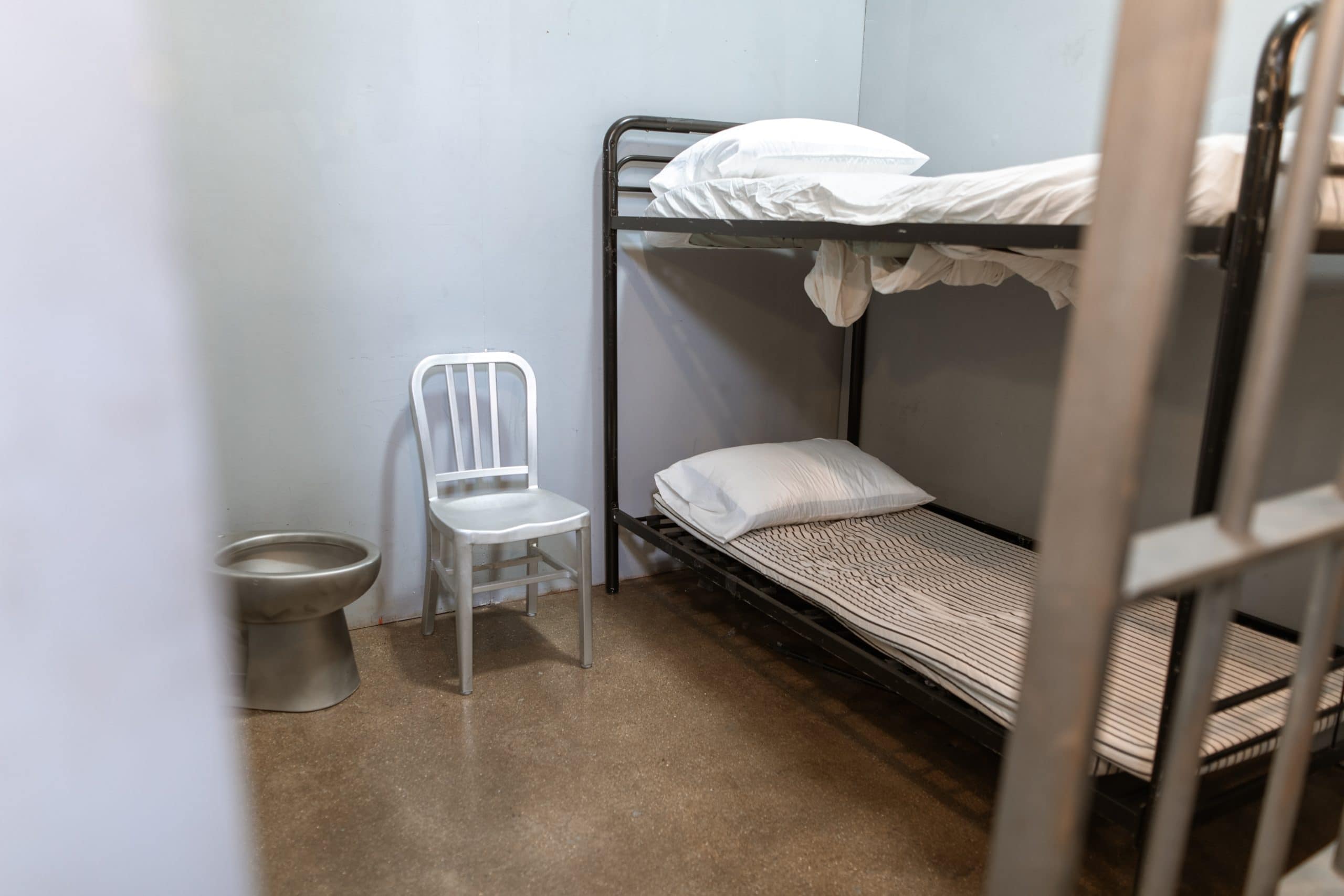

West Valley Detention Center inmate Chelsea Giddens, who was convicted of gassing a peace officer by throwing a milk carton of urine at a deputy, lost an appeal to her case. Giddens argued the jail should have tested the contents of the carton.
San Bernardino Sheriff’s Deputy Jenna Van Leer testified she was certain the “salty, warm” liquid that splashed in her eyes and mouth from Giddens’ cell Aug. 17, 2018, was urine. Giddens denied throwing anything at the deputy, and claimed the assailant was a woman named Mary. In closing statements, her attorney argued that the prosecution had failed to prove beyond a reasonable doubt the liquid was urine, and that it could have been a mixture of warm water and rotting food.
Giddens’ case
Giddens’ appeal to reverse her conviction argued the jail did not perform a duty to test the substance, that the jail’s failure to do so violated her due-process rights to the disclosure of exculpatory evidence, and that San Bernardino Superior Judge Ingrid Uhler erred in dismissing her 1181.1 motion to acquit on lack of evidence.
California law defines battery by gassing, while a person is confined in a local detention center, as throwing human excrement or bodily fluids at an officer’s skin. The same law requires the person in charge of the detention facility to use every available means to preserve and test substances believed to be bodily fluids in an event of a suspected battery by gassing.
Van Leer had described the fluid as an “unknown liquid” in her incident report.
Giddens’ counsel argued that description conflicted with Van Leer’s description at trial, and that the case should have been thrown out earlier, but claimed during cross-examination that she did not identify the fluid as urine due to instructions from her sergeant, not from any doubt in her mind.
In trial, Van Leer said that while she doesn’t “go around tasting urine,” she could identify urine due to her experience as an EMT, where she had been peed on multiple times. While Van Leer was tested for infections, Giddens flooded her cell by clogging her toilet and smeared feces on her tray slot, the ruling said.
The ruling
California law requires jail supervisors use “every available means” to investigate a gassing incident, but the panel agreed there was not enough of the liquid to test. The panel also found that the requirement to test for urine was to track the spread of diseases and protect peace officers, not to gather evidence for trial. It did not create any rights for the inmate or impose a duty on the facility to preserve evidence.
Although the jail did not test the liquid, it was impossible to do so since there was not enough of the liquid on the floor or on Van Leer to analyze, Van Leer said. The water in the flooded cell made it impossible to collect a sample, Deputy Tyler Gilbert said.
The panel threw out Giddens’ argument that the detention center’s failure to test the substance violated her right to disclosure of potentially exculpatory evidence because Giddens did not prove the liquid was potentially exculpatory, and because Giddens herself destroyed the evidence by flooding her cell.
Finally, the panel found that Uhler was correct in denying Giddens’ motion to dismiss for lack of evidence. Giddens had conflated the jury instruction on evaluating circumstantial evidence, wherein the jury must accept circumstantial evidence that points to innocence when it conflicts with circumstantial evidence that points to guilty, with the minimum threshold of whether the prosecution has presented sufficient evidence.
The panel affirmed all counts.
Parties
Fourth District Court of Appeal Associate Justice Marsha Slough wrote the opinion, joined by Presiding Judge Manuel Ramirez and Associate Justice Douglas Miller.
Court-appointed lawyer Taylor Clark represented Giddens.
Xavier Becerra, attorney general; Lance Winters, chief assistant attorney general; Julie Garland, assistant attorney general; and deputy attorney generals Eric Swenson and Junichi Semitsu argued for the state.
Uhler oversaw the case in San Bernardino Superior Court.
Case No. FWV18004475
Appellate No. E073390
Read the ruling here.